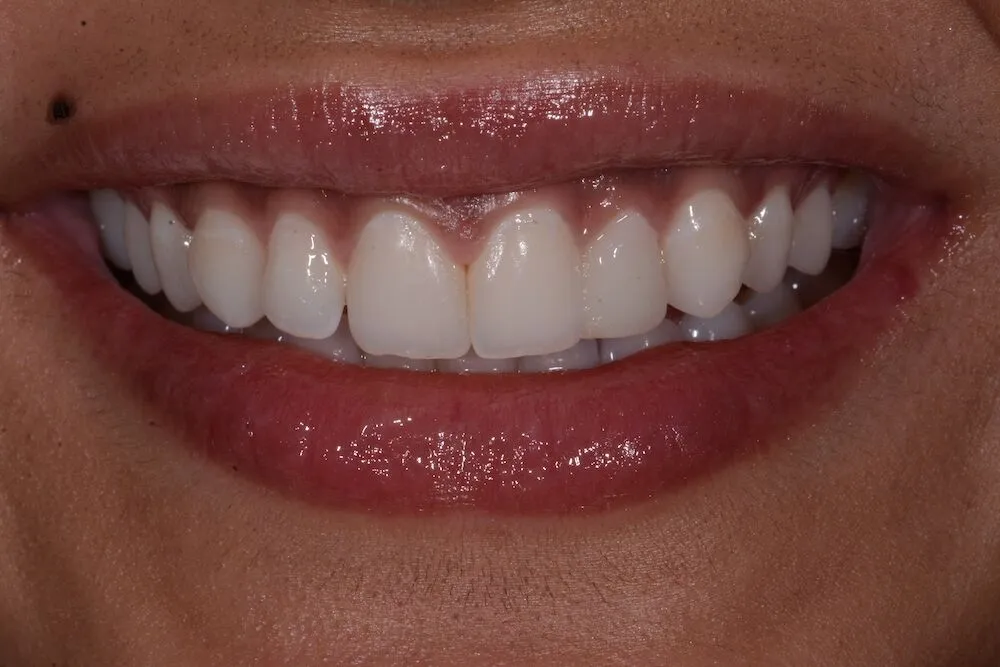
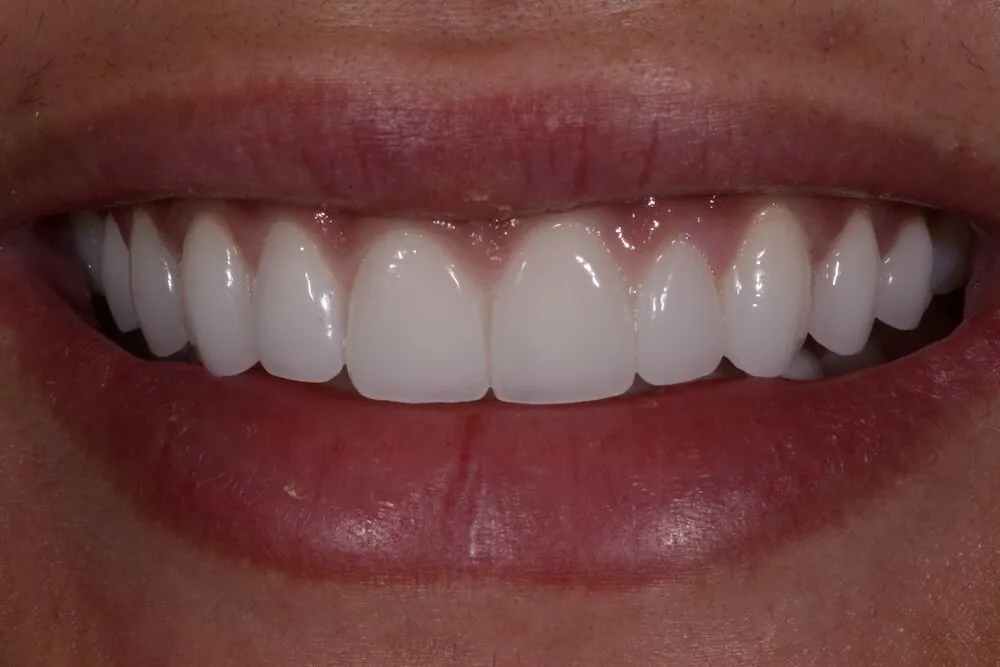
Professional teeth whitening delivers dramatically brighter results that no over-the-counter product can match — safely, comfortably, and under the expert supervision of our University at Buffalo–trained doctors.
Why Teeth Stain
Tooth discoloration occurs through two primary mechanisms. Extrinsic staining affects the outer enamel surface — caused by coffee, tea, red wine, berries, tobacco, and certain foods that bind to enamel proteins over time. As enamel naturally thins with age, these stains deepen and become more resistant to brushing.
Intrinsic staining penetrates to the inner dentin layer — caused by tetracycline antibiotics, fluorosis, dental trauma, or simply the natural yellowing that accompanies aging as the underlying dentin shows through thinning enamel. Professional whitening addresses both types with a precision and efficacy that consumer products simply cannot achieve.
Our whitening protocols are carefully designed to maximize brightness while protecting enamel integrity and minimizing sensitivity — a balance that requires clinical expertise and professional-grade materials.
Both Dr. Pete and Dr. Alex earned their degrees from one of the nation's top-ranked dental schools — a foundation of clinical excellence that sets them apart from day one.
Both doctors hold LVI certification — the world's most respected postgraduate program in cosmetic & neuromuscular dentistry. Fewer than 1% of dentists reach this level.
Vita Classic Shade Scale — Typical Before & After
What To Expect
Professional whitening at Monroe Family & Cosmetic Dentistry is a carefully supervised process from start to finish.
We evaluate your current shade, enamel condition, and any existing restorations — ensuring whitening is appropriate and that your expectations are realistic. Restorations (crowns, veneers, bonding) do not whiten, and we will advise accordingly.
For optimal results, we recommend a professional cleaning prior to whitening to remove surface deposits that can prevent even penetration of the whitening agent.
Professional-strength whitening gel is applied under clinical supervision — either in-office for immediate results, or via custom take-home trays with detailed instructions for gradual whitening at your convenience.
We provide a personalized maintenance plan — including dietary recommendations and touch-up timing — to help you preserve your brilliant results for as long as possible.
Why Teeth Darken
Whitening works chemically, not mechanically, and what it can achieve depends entirely on where the discolouration sits. Knowing which kind you have is the difference between a result that delights you and one that disappoints.
Coffee, tea, red wine, dark berries and tobacco deposit pigment onto the outer enamel over years. This is what whitening handles best — the peroxide breaks the pigment molecules apart and the colour lifts substantially, often several shades in one appointment.
Age thins the enamel and reveals the naturally yellower dentine beneath, and some antibiotics taken in childhood, tetracycline in particular, bind into the tooth structure itself. These respond partially at best. Where the result falls short, veneers or bonding are the honest alternative rather than repeated whitening.
Crowns, veneers, bridges and tooth-coloured fillings do not change colour at all. If you have visible restorations at the front, whitening the natural teeth around them will make the mismatch more obvious, not less — which is why any planned restorative work is done after whitening, matched to your new shade.
In-Office Or At Home
Both use the same active chemistry. What differs is concentration, control and how long it takes. Neither is better in the abstract — the right one depends on your timeline, your sensitivity and how much of the work you want to do yourself.
In-office treatment uses a higher concentration under supervision, with your gums protected, and produces a visible change in a single appointment. It suits a deadline: a wedding, a photograph, an event with a date on it.
Custom take-home trays use a gentler gel over one to two weeks. The gradual approach is often kinder to sensitive teeth, and because the trays are yours, topping up a year later costs only a syringe of gel rather than another appointment. Many patients do both — in-office to establish the shade, trays to maintain it.
Managing Sensitivity
Short sharp twinges, especially to cold, affect a substantial share of patients during treatment. It is caused by the gel passing through the enamel and irritating the nerve, and it settles within a day or two of finishing. It does not indicate damage.
Using a desensitising toothpaste for two weeks before you start makes a real difference. Tell us if you already have sensitive teeth and we will adjust the concentration and session length rather than push through it.
With take-home trays, wearing them every other night instead of nightly reaches the same endpoint with far less discomfort. It takes a little longer and is almost always the better trade.
Lingering pain rather than brief twinges, or sensitivity isolated to one tooth, is worth a call. That pattern can point to a crack, decay or a failing filling that was there before whitening and needs looking at.
Making It Last
Whitening is not permanent, and how quickly the colour fades is driven almost entirely by daily habits rather than by the treatment itself. A few deliberate choices in the first week, and a sensible routine after, stretch the result considerably.
Enamel is temporarily more porous straight after treatment, so pigment penetrates far more readily than usual. Avoiding coffee, tea, red wine, curry, tomato sauce and anything deeply coloured during this window protects the shade you just paid for.
Nobody gives up coffee permanently. Drinking staining beverages through a straw where you can, rinsing with water afterwards, and not letting them sit in your mouth are small habits that add up over months.
If you have custom trays, a single night of gel every few months holds the colour indefinitely and costs very little. This is the main practical argument for the take-home route, and why many patients keep their trays long after the initial course.
A professional cleaning removes the surface film that dulls the result and is the reason teeth often look noticeably brighter afterwards without any whitening at all. Keeping your six-month appointments protects the investment.
FAQ
Results vary depending on your starting shade, the nature of your discoloration, and the whitening protocol used. Most patients achieve 4 to 8 shades of improvement. During your consultation, we will assess your specific situation and provide an honest, realistic outcome estimate.
Some patients experience temporary sensitivity during or after whitening — particularly those with pre-existing sensitivity or thin enamel. Our protocols are designed to minimize this risk, and we can prescribe desensitizing agents when appropriate. Sensitivity, when it occurs, is temporary.
Professional whitening results typically last 1 to 3 years, depending on dietary habits, oral hygiene, and lifestyle factors. Coffee, tea, red wine, and tobacco are the primary contributors to re-staining. Periodic touch-up treatments maintain your results between full whitening sessions.
Whitening is not appropriate for everyone. It is ineffective on crowns, veneers, bonding, and some intrinsic stains. Pregnant or nursing patients should defer treatment. We conduct a thorough assessment before recommending whitening to ensure it is both safe and likely to produce meaningful results for you.
Professional whitening uses significantly higher concentrations of whitening agents than any over-the-counter product — delivering faster, more dramatic, and more even results. Custom trays ensure complete coverage. And clinical supervision eliminates the risk of misuse, uneven whitening, or enamel damage.
We recommend whitening before any restorative or cosmetic work — veneers, bonding, crowns — so that we can match your new restorations to your brightest natural shade. Whitening after restorations are placed cannot lighten them, and may create a mismatch.
Used correctly, no. Carbamide and hydrogen peroxide at professional concentrations break down pigment within the enamel without dissolving or thinning the enamel itself, and this has been studied extensively over decades. The risks come from misuse — over-the-counter kits with poorly fitting trays that leak gel onto the gums, acidic internet remedies that genuinely do erode enamel, and whitening far more often than recommended. Supervision is what makes the difference.
Because whitening only affects natural tooth structure. Porcelain and composite hold whatever shade they were made in, so brightening the teeth around them widens the gap. If you have visible restorations at the front, the sequence matters: whiten first, allow the shade to settle for about two weeks, then replace or rematch those restorations to your new colour.
We recommend waiting. There is no strong evidence of harm, but whitening is entirely elective and there is no reason to introduce an unnecessary variable during pregnancy or nursing. Gums are also often more sensitive and inflamed during pregnancy, which makes the experience less comfortable and the result harder to judge. Cleanings and routine care should continue as normal.
Strips can lift light surface staining and are inexpensive, so they are a reasonable starting point for mild cases. Their limits are concentration and fit — a one-size tray or strip does not adapt to your teeth, so coverage is uneven and gel reaches the gums, which is the usual source of irritation. They also cannot tell you why your teeth are discoloured. If strips have not given you what you wanted, that is useful information to bring to a consultation.
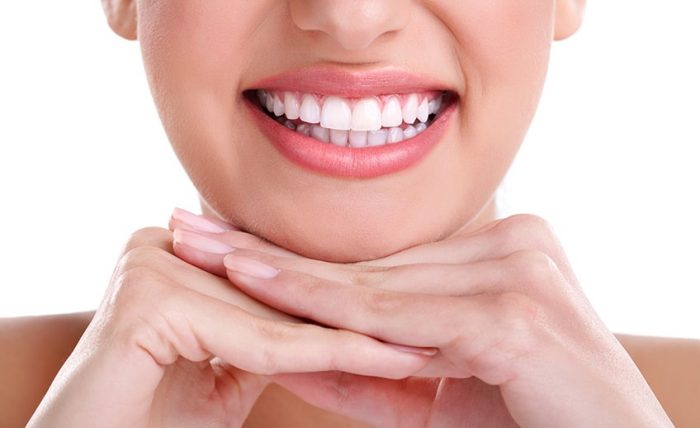
Book your professional whitening appointment and discover the dramatic difference clinical-grade whitening makes.