What Is Invisalign?
The invisible way
to a perfect smile.
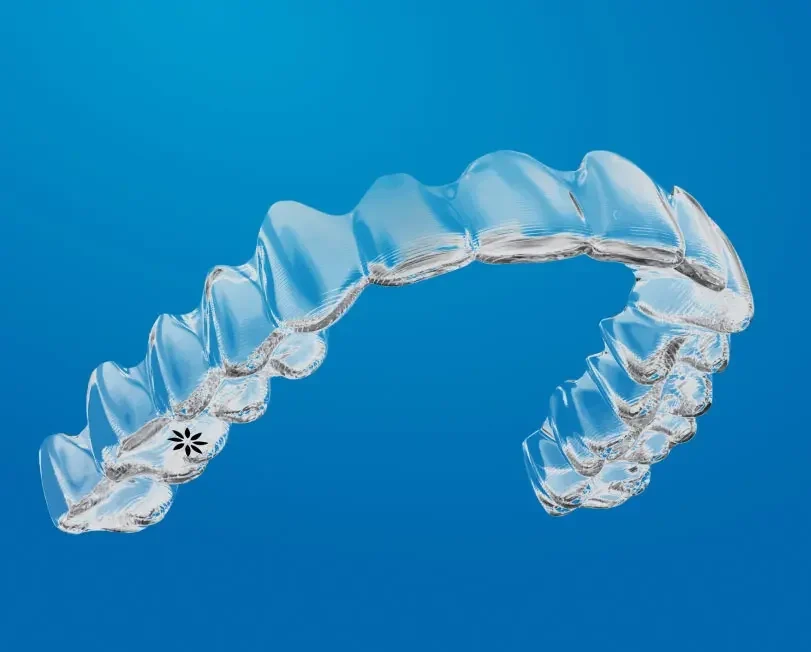
Invisalign® uses a series of custom-fabricated, removable clear aligners to gradually and precisely move your teeth into their ideal positions — without a single metal bracket or wire. Each aligner is worn for approximately one to two weeks before progressing to the next in your personalized series.
At Monroe Family & Cosmetic Dentistry, Invisalign treatment is overseen by Dr. Alex — whose combined University at Buffalo D.D.S. and LVI training provides an exceptional understanding of occlusion, facial aesthetics, and long-term bite health. Your aligners are not simply straightening your teeth — they are being guided by a doctor who understands the profound relationship between alignment, function, and beauty.
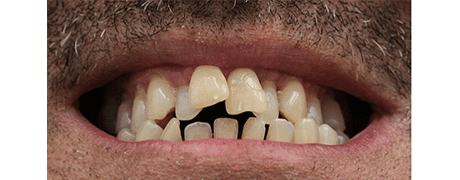
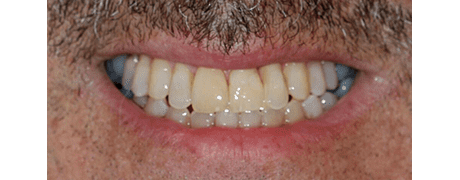
Invisalign is effective for adults and teenagers alike — addressing crowding, spacing, overbites, underbites, crossbites, and open bites. Most treatment plans range from 6 to 18 months depending on complexity.
School of Dental Medicine
Both Dr. Pete and Dr. Alex earned their degrees from one of the nation's top-ranked dental schools — a foundation of clinical excellence that sets them apart from day one.
for Advanced Dental Studies
Both doctors hold LVI certification — the world's most respected postgraduate program in cosmetic & neuromuscular dentistry. Fewer than 1% of dentists reach this level.
Invisalign vs. Braces
Why our patients
choose Invisalign.
Clear aligners are nearly undetectable — allowing you to straighten your teeth without anyone knowing you are in treatment.
Remove your aligners to eat, drink, brush, and floss — maintaining perfect oral hygiene throughout treatment with no dietary restrictions.
Smooth, custom-fitted plastic with no sharp wires or brackets — dramatically more comfortable than traditional orthodontics.
Check-in appointments are typically shorter and less frequent than traditional braces — designed to respect your schedule.
Advanced 3D treatment planning allows us to show you your projected results before treatment begins — so you know exactly what to expect.
Invisalign offers specialized teen aligners with compliance indicators and replacement aligners — making it ideal for patients of all ages.
Find Out If You Qualify
Take the Invisalign® Assessment
Scan the QR code in our office or book a consultation to find out if Invisalign is right for you — most patients are excellent candidates.
Book a Free AssessmentIs It Right For You
What Invisalign treats,
and when braces still win.
Clear aligners have advanced enormously and now handle the large majority of cases that once needed brackets and wires. They are not universal, and a practice that tells you otherwise is selling rather than diagnosing.
Crowding and spacing, mild to moderate overbite and underbite, crossbite, teeth that have shifted after previous orthodontics, and the very common case of lower front teeth that have gradually crowded with age. Most adult cases fall squarely in this range.
Severe rotations, teeth that need substantial vertical movement, and large gaps from missing teeth are all achievable but demand precise attachment placement and strict wear discipline. These cases take longer and depend more on the patient than the appliance.
Skeletal problems where the jaws themselves are misaligned rather than the teeth, and complex cases involving significant bite reconstruction, are usually better served by fixed appliances or a combined approach. We will tell you plainly if that is what your case needs.
Day To Day
Twenty-two hours
is the whole deal.
The single factor that determines whether your treatment finishes on schedule is not the technology or the practice — it is whether the aligners are actually in your mouth. Twenty to twenty-two hours a day is the requirement, which in practice means they come out to eat and to brush, and go straight back in.
Patients who treat the aligners as optional evening wear do not get the result the plan predicted, and the correction has to be re-scanned and restarted. This is the honest trade-off against braces: you gain the ability to remove them, and you take on the responsibility that comes with it.
The first few days of each new tray feel tight, sometimes achy. That pressure is the treatment working. It settles within about forty-eight hours, and most patients find changing trays before bed makes the adjustment easier.
Practical Details
Aligners come out for all food and for anything other than water. Hot drinks warp the plastic; coloured drinks stain it. There are no food restrictions at all, which is a genuine advantage over braces.
A slight lisp is common for the first few days as your tongue adapts to the thin plastic edge. It resolves on its own, and reading aloud for a few minutes accelerates it noticeably.
Most cases need small tooth-coloured bumps bonded to certain teeth, giving the aligners something to grip so they can rotate or move a tooth precisely. They are barely visible and are removed and polished away at the end.
Rinse the trays whenever they come out and brush them gently with clear soap rather than toothpaste, which is abrasive and clouds the plastic. Brushing before reinserting prevents trapping sugars against your enamel for hours.
Afterwards
Retainers are
not optional.
The most common way people lose an orthodontic result is not a failure of the treatment. It is stopping retainer wear a year or two afterwards. Teeth carry a lifelong tendency to drift back toward where they started, and retention is what holds the line.
Full-time wear apart from eating and brushing. The bone and ligament around each tooth is still reorganising around its new position, and this is when relapse happens fastest if retention lapses.
After the initial period, most patients move to nights only. That is not a temporary phase — it continues long term. A few nights a week is enough for many people after several years, but stopping altogether reliably produces slow drift.
A thin wire bonded behind the lower front teeth is often used where crowding was significant, since those teeth relapse most readily. It is invisible, requires no discipline, and needs floss threaders or a water flosser to clean around.
If a retainer stops fitting because you stopped wearing it, do not force it. Come in — a short course of aligners often recovers the position, and catching it early is the difference between a few trays and starting over.
FAQ
Invisalign questions,
answered.
Treatment duration varies based on complexity. Mild cases can be completed in as little as 6 months. Moderate to complex cases typically require 12 to 18 months. Dr. Alex will provide an accurate timeline estimate following your initial consultation and 3D scan.
Invisalign aligners should be worn 20 to 22 hours per day for optimal results. They are removed only for eating, drinking anything other than water, brushing, and flossing. Consistency is the primary factor in achieving your projected outcome on schedule.
For a wide range of alignment issues — including crowding, spacing, and most bite corrections — Invisalign delivers results that are clinically equivalent to traditional braces. For highly complex skeletal corrections, we will advise on the most appropriate approach during your consultation.
Most patients experience mild pressure or discomfort for 24–48 hours following each aligner change — a sign that the aligners are actively moving your teeth. This is significantly less discomfort than typically associated with wire tightening in traditional braces, and resolves quickly.
Yes — retention is a critical phase of any orthodontic treatment. Following active treatment, we will provide custom retainers to maintain your new smile. Teeth have a natural tendency to shift without retention; consistent retainer wear protects your investment permanently.
Many dental plans with orthodontic benefits contribute to Invisalign treatment similarly to traditional braces. We will review your benefits thoroughly and provide complete cost transparency. Flexible payment plans and CareCredit financing are available.
Cost depends on how much movement your case requires and therefore how many aligners are needed, so a figure quoted before a scan is guesswork. You will receive a written plan with the full cost before starting. We are a fee-for-service practice and work with your insurance to obtain the maximum benefit available under your plan — many plans include an orthodontic allowance that applies to clear aligners. Cherry financing and CareCredit are available for monthly payments. Call (770) 266-7188.
Call us the same day if you can. In most cases the instruction is to go back to your previous tray, which will still fit, rather than jumping ahead to the next one — moving too fast risks the aligner not seating and the teeth not tracking. Depending on where you are in the sequence we either order a replacement or move you forward early. Losing one tray is a minor setback; leaving the gap unmanaged for weeks is not.
Usually yes, with planning. Attachments do not bond reliably to porcelain, so the plan works around those teeth and uses the natural teeth to generate movement. Implants are different — they are fused to bone and cannot be moved at all, so they act as fixed anchors and the surrounding teeth are moved relative to them. Both are common situations and neither rules you out.
Both, within limits. Aligners routinely correct overbite, underbite and crossbite where the problem is the position of the teeth. Where the jaws themselves are misaligned — a skeletal discrepancy rather than a dental one — aligners can improve the appearance but not the underlying relationship, and a combined orthodontic approach or surgical consultation is the honest answer. The scan and examination tell us which situation you are in.
Your straightest, most
confident smile.
Schedule your Invisalign consultation with Dr. Alex and discover how clear aligner treatment can transform your smile — invisibly and comfortably.