Georgia requires a licensed dentist to complete continuing education to stay licensed. Meeting that minimum, and building a practice around it, are two very different things.
Dentistry changes faster than most patients realise. The materials, the imaging, the bonding chemistry, the way a bite is analysed — much of what is routine now did not exist, or was not reliable, when your dentist graduated. A degree certifies what someone knew on the day they finished. Continuing education is what keeps that knowledge from quietly going out of date.
The state's requirement is a floor, not a standard of excellence. It can be satisfied with lectures that never ask the attendee to pick up an instrument. The education that actually changes what happens in the operatory tends to be hands-on, multi-day, and taught by people doing the work — and it is entirely voluntary.
Where our doctors trained after dental school
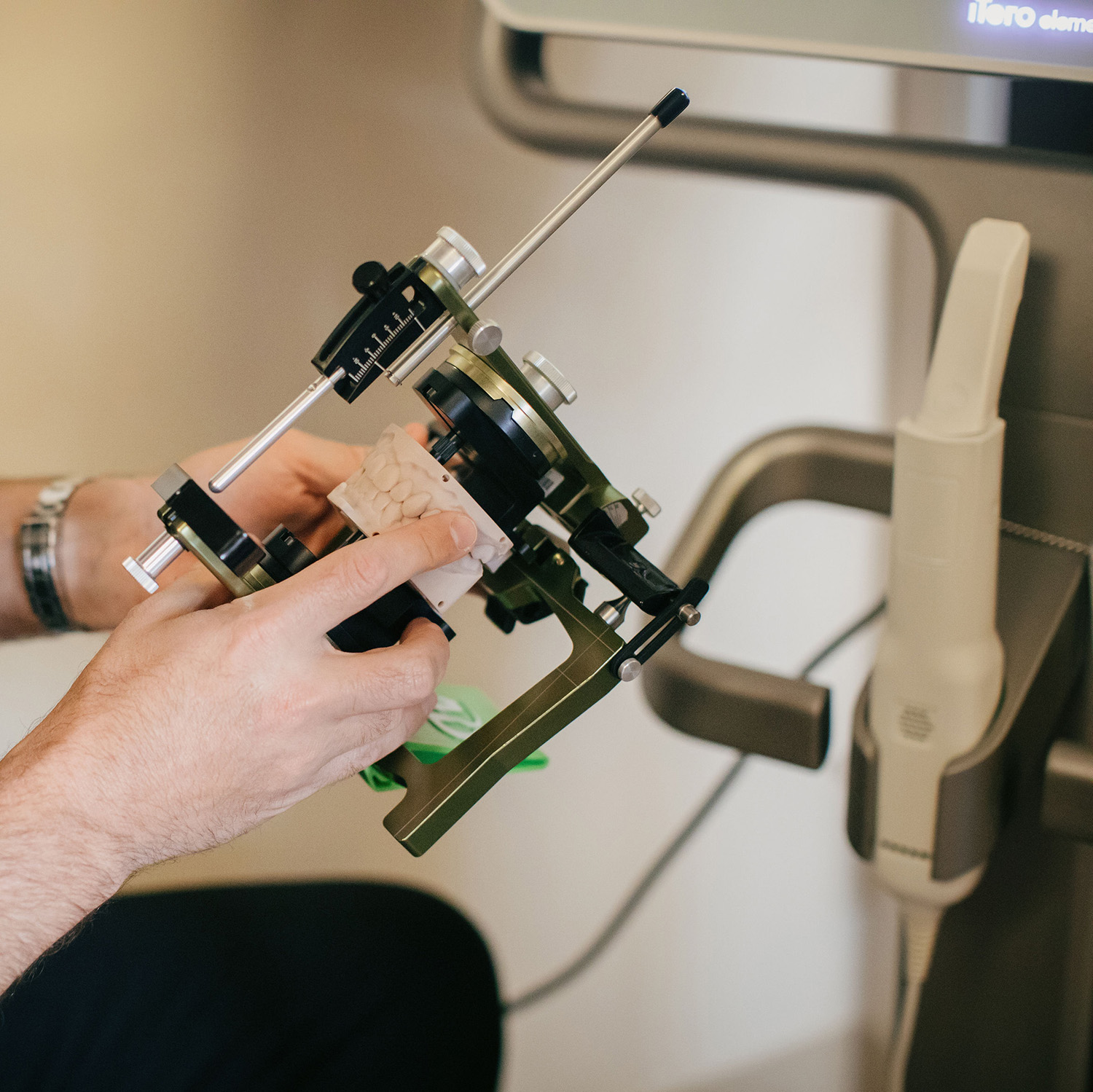
Both Dr. Pete and Dr. Alex earned their degrees at the University at Buffalo School of Dental Medicine. What came afterward is what shapes the dentistry you receive here.
- The Las Vegas Institute for Advanced Dental Studies (LVI) — the leading postgraduate program in cosmetic and neuromuscular dentistry. LVI training is why a veneer case here begins with facial proportion, lip line and bite analysis rather than a shade guide.
- Spear Education — a curriculum built around treatment planning and restorative dentistry, particularly complex cases where function and aesthetics have to be solved together.
- DOCS Education — the certification behind our sedation protocols, covering patient assessment, monitoring and emergency management.
- Implant training through AAID-affiliated programs — surgical placement, grafting, and the planning that determines whether an implant lasts decades.
What this actually changes for you

Advanced training shows up in ways that are easy to miss and hard to fake. It is the reason a difficult case gets planned rather than improvised, the reason a trial smile exists before enamel is touched, and the reason we can tell you honestly when a treatment is not the right answer. The most useful thing an experienced clinician develops is judgement about what not to do.
It also means fewer referrals out. Procedures that many general practices send elsewhere — implant placement, sedation, full-arch reconstruction, sleep appliances — are done here, by doctors who trained specifically for them, in an office that already knows your history.
When choosing any dentist, it is entirely reasonable to ask where they have trained since dental school and how recently. A practice that invests in education will be glad you asked.